

Immunogenicity Testing Services
At Avance Biosciences, we specialize in comprehensive immunogenicity testing to support preclinical and clinical anti-drug antibody (ADA) studies. Our expert team uses cutting-edge technology to assess how the body’s immune system reacts to biologic therapies, helping you navigate the complexities of drug development and meet stringent regulatory standards.
Immunogenicity Testing Services
At Avance Biosciences, we specialize in comprehensive immunogenicity testing to support preclinical and clinical anti-drug antibody (ADA) studies. Our expert team uses cutting-edge technology to assess how the body’s immune system reacts to biologic therapies, helping you navigate the complexities of drug development and meet stringent regulatory standards.
Why Immunogenicity Testing?
Immunogenicity testing is essential to determine if a biologic therapy elicits an immune response in the body. This response can impact drug safety and effectiveness, potentially leading to adverse reactions or therapeutic failure. FDA recommends adopting a risk-based approach to evaluating and managing immune responses to or immunologically related adverse clinical events associated with therapeutic protein products that affect their pharmacokinetics, pharmacodynamics, safety, and efficacy. Immunogenicity tests should be designed to detect ADA that could mediate unwanted biological or physiological consequences such as neutralizing activity or hypersensitivity responses.
Our state-of-the-art services are designed to detect and quantify ADAs, including neutralizing antibodies (NAbs), providing critical data for regulatory submissions and market approval.
Multi-tiered Testing Approach
Avance Biosciences uses a multi-tiered approach for ADA assessment. We can customize ADA assay tailored to your study requirements throughout all phases of drug development. To increase drug tolerance, we employ methods such as acid dissociation, affinity capture and elution, as well as solid phase extraction and acid dissociation.
Screening Assay
Confirmatory Assay
Titration Assay
Neutralization Assay
- Early detection of low- and high- affinity ADAs using sensitive methods
- Reactive samples will be evaluated in a subsequent confirmatory assay
- To confirm specific binding of ADA to the therapeutic protein
- Eliminates potential false-positive results from unspecific binding in the initial screening assay
- ADA confirmed samples will be further characterized by titration and neutralization assays
- Relative level of ADA in a positive sample is assessed by titration
- Perform serial dilution on the sample and report the reciprocal of the highest dilution factor where the sample still tests positive
- NAbs are a subset of ADAs that inhibit the therapeutic activity of the product
- Selection of NAb assay type is dependent on the MoA of the drug and the nature of its target
- NAb assay could be cell-based assay or competitive ligand binding assay
Screening Assay
- Relative level of ADA in a positive sample is assessed by titration
- Perform serial dilution on the sample and report the reciprocal of the highest dilution factor where the sample still tests positive
Confirmatory Assay
- To confirm specific binding of ADA to the therapeutic protein
- Eliminates potential false-positive results from unspecific blinding in the initial screening assay
- ADA confirmed samples will be further characterized by titration and neutralization assays
Titration Assay
- Early detection of low- and high- affinity ADAs using sensitive methods
- Reactive samples will be evaluated in a subsequent confirmatory assay
Neutralization Assay
- Early detection of low- and high- affinity ADAs using sensitive methods
- Reactive samples will be evaluated in a subsequent confirmatory assay
State-of-the-Art Platforms
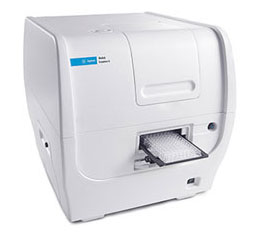
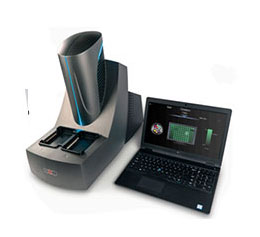
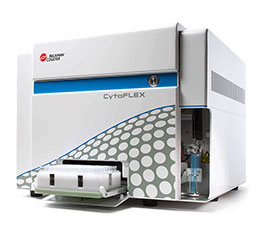
Avance Biosciences provides comprehensive immunoassay lab services, including ELISA, MSD, and flow cytometry, tailored to meet the diverse needs of your projects. Our experienced scientific team adeptly utilizes a range of cutting-edge technology platforms to deliver top-tier bioanalysis services for Anti-Drug Antibody (ADA) assessments. Below are the technology platforms we commonly utilize:
Technique
Principle
Advantages
Detects and quantifies antibodies through antigen-antibody interactions
- High sensitivity and specificity
- Well-established and widely used.
- Suitable for high throughput screening
Electrochemiluminescence-based immunoassay
- Enhanced sensitivity and dynamic range
- Multiplexing capability
- Low sample volume requirement
Measures fluorescence or light scatter properties of individual cells
- Provides information on ADA specificity and cell-mediated immune responses
- Enables characterization of ADA positive cells based on cell surface markers
Our Immunogenicity Testing Services
- Assay development and validation
- Tech transfer of validated assays
- Preclinical study sample analysis
- Clinical study sample analysis
- GLP compliant services
FAQs
Our immunogenicity testing services include assay development and validation, technology transfer of existing qualified or validated assays, and analysis of preclinical and clinical samples. Testing strategies and assay requirements are tailored to the therapeutic modality, development stage, and objectives of each program.
We typically use a tiered ADA testing strategy that may include screening, confirmatory testing, titration, and, when appropriate, neutralizing antibody (NAb) assessment. The testing strategy is tailored to the therapeutic, mechanism of action, development stage, and immunogenicity risk of the program.
We support multiple assay platforms, including ELISA, MSD electrochemiluminescence, flow cytometry, and FluoroSpot. The platform and assay format are selected based on the specific requirements of the program, including sensitivity, throughput, sample characteristics, and the biological mechanism being evaluated.
Our immunogenicity testing programs are designed and performed in accordance with applicable regulatory guidance and quality-system requirements. Depending on the program and intended use of the data, testing can be conducted under appropriate GLP or other client-specific quality requirements, with appropriate assay validation, documentation, and data-integrity controls.
Yes. We support technology transfer of existing qualified or validated assays, allowing sponsors to leverage established methods rather than developing a new assay from the beginning. The transferred method is evaluated and implemented according to the requirements of the program.
Yes. We support immunogenicity sample analysis across both preclinical and clinical development programs, with the testing strategy and assay requirements tailored to the stage and objectives of the study.
Each stage of a standard ADA assay program typically takes approximately 6–8 weeks. Accordingly, a complete assay development and validation program generally requires approximately 12–16 weeks, depending on the assay format, therapeutic modality, matrix, sample requirements, and validation scope. More complex programs may require additional time.
Yes. We support immunogenicity testing for gene and cell therapy programs. Depending on the therapeutic and study objectives, testing may evaluate immune responses to relevant components such as viral vectors, transgenes, or cellular products.
We can evaluate and address drug interference and limited drug tolerance using appropriate assay strategies. These may include acid dissociation, drug-tolerant assay formats, and other approaches selected according to the assay design and characteristics of the therapeutic.
The choice depends on the therapeutic’s mechanism of action, biological target, and the intended assessment of neutralizing activity. Cell-based assays may be appropriate when neutralization can be directly linked to the drug’s biological activity, while ligand-binding approaches may be appropriate when the mechanism and assay objectives support that format. We select the approach based on the characteristics and development stage of the program.
Immunogenicity assay planning should begin early in development, with timing based on the therapeutic modality, immunogenicity risk, development stage, and anticipated regulatory requirements. For programs entering clinical development, assay development and qualification or validation should be planned sufficiently in advance to support clinical sample analysis and regulatory submissions.
Regulatory Guidance
This technical specifications document represents the Food and Drug Administration's (FDA's) current thinking on this topic. It does not create or confer any rights for or on any person and does not operate to bind FDA or the public. You can use an alternative approach if the approach satisfies the...
The Food and Drug Administration (FDA or the Agency) is announcing the availability of a draft guidance for industry entitled “Immunogenicity Information in Human Prescription Therapeutic Protein and Select Drug Product Labeling--Content and Format.” This draft guidance provides recommendations for incorporating clinically relevant immunogenicity information into the labeling of products...
The purpose of this guidance is to provide recommendations to applicants regarding whether and when comparative clinical immunogenicity studies may be needed to support licensure of proposed biosimilar and interchangeable recombinant human insulins, recombinant human insulin mix products, and recombinant insulin analog products that are intended for the treatment of...