
Gene Editing NGS Safety Assessment Services
Avance Biosciences is a full-service contract research organization (CRO) offering diverse and comprehensive NGS-based service portfolios— spanning sequencing identification, gene editing characterization, genomic safety assessment, bioinformatics, and regulatory-compliant data management. Avance has been performing NGS-based safety assessments for gene editing products for over 10 years, developing and refining the very workflows that the newly published FDA Draft Guidance Safety Assessment of Genome Editing in Human Gene Therapy Products Using Next-Generation Sequencing (FDA-2026-D-1255) now recommends. This decade of operational experience, scientific innovation, and regulatory alignment has established Avance Biosciences as a trusted partner and leading provider of NGS-based safety assessment services across the gene editing product development lifecycle.
Gene Editing NGS Safety Assessment Services
Avance Biosciences is a full-service contract research organization (CRO) offering diverse and comprehensive NGS-based service portfolios— spanning sequencing identification, gene editing characterization, genomic safety assessment, bioinformatics, and regulatory-compliant data management. Avance has been performing NGS-based safety assessments for gene editing products for over 10 years, developing and refining the very workflows that the newly published FDA Draft Guidance Safety Assessment of Genome Editing in Human Gene Therapy Products Using Next-Generation Sequencing (FDA-2026-D-1255) now recommends. This decade of operational experience, scientific innovation, and regulatory alignment has established Avance Biosciences as a trusted partner and leading provider of NGS-based safety assessment services across the gene editing product development lifecycle.
FDA Draft Guidance on Genome Editing Safety Assessment — What It Means for Your Program
The FDA’s Center for Biologics Evaluation and Research (CBER) released draft guidance entitled “Safety Assessment of Genome Editing in Human Gene Therapy Products Using Next-Generation Sequencing” (Docket FDA-2026-D-1255) on April 14, 2026. This draft guidance provides a framework and specific recommendations on sequencing strategies, sample selection, analysis parameters, and reporting for nonclinical studies in support of IND and BLA submissions. It covers therapies targeting the genome, epigenome, and transcriptome. Avance Biosciences is uniquely positioned to support sponsors in meeting every requirement outlined in this guidance.
Key requirements covered in the guidance include:
- Expanded scope for different editing system and sample requirements to evaluate the on and off-target events
- Short- or long-read sequencing strategies for comprehensive on-target assessment
- Experimental unbiased off-target nomination methods (e.g., GUIDE-seq) alongside in silico approaches
- Strategies for confirmation of nominated off-target panels and definition of analysis parameters
- Genome-wide translocation analysis across confirmed off-target and on-target loci
- Sequencing method, data quality and pipeline analysis recommendations
Uniquely Positioned
Avance Biosciences is uniquely positioned to help sponsors align with, and fully address, the guidance’s sequencing, analysis, and reporting expectations.
Our workflows were built around these principles long before the draft guidance was published. Sponsors partnering with Avance benefit from a team that not only understands the regulatory language but helped shape the science behind it.
Comprehensive Platform Coverage
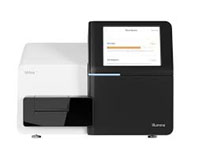
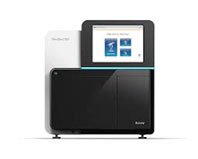
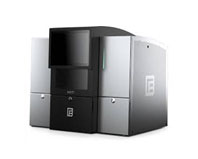
Next-Generation and Third-Generation Sequencing: Avance maintains a comprehensive suite of state-of-the-art sequencing instruments across short-read and long-read technologies, enabling optimal platform selection for each application.



Key Features
10+ Years of Gene Editing NGS Experience
Avance has been developing, validating, and refining NGS-based gene editing safety workflows for over a decade. Our NGS assays have been deployed across every stage of development – from early-stage discovery and CMC characterization to release and stability testing, preclinical PK/PD studies, and clinical studies using patient samples. Our methods are not adapted from general genomics services — they were purpose-built for specific editing modalities and the regulatory demands of gene therapy development.
Scientific Expertise Across All Editing Modalities
Our team includes specialists in molecular biology, cell biology, genomics, bioinformatics, and regulatory science. We support programs across every major editing platform – ZFN, TALEN, Meganuclease, CRISPR-Cas9, CRISPR-Cas12a, CRISPR-CasX, base editors, prime editors, and epigenome editing systems – designing the most scientifically rigorous and regulatory-appropriate safety strategy for each program’s specific context.
Integrated End-to-End Capability
Avance can support the complete workflow from upstream cell treatment and gene editing delivery (e.g. viral transduction, LNP, RNP) through on-target characterization, off-target nomination and confirmation, translocation assessment, bioinformatics, and regulatory-ready reporting -all within a single organization. This eliminates inter-laboratory variability, reduces timelines, and ensures seamless data integration.
Regulatory-Grade System
All services are conducted in a well-designed laboratory environment aligned with current regulatory standards. Data generation and handling are built to 21 CFR Part 11 requirements, with full data integrity, validated electronic systems, comprehensive audit trails (from data generation to pipeline analysis), and complete chain-of-custody documentation — producing submission-ready data packages for IND and BLA filings.
Bioinformatics Infrastructure
Avance maintains proprietary, purpose-built analysis pipelines for each service module — on-target analysis, GUIDE-seq/CIRCLE-seq/SITE-seq off-target discovery, rhAmpSeq confirmation, and translocation analysis. All pipelines are validated for sensitivity, specificity, accuracy, and reproducibility, and are tailored to the requirements of diverse editing modalities to generate submission-ready datasets.
Service Offerings
Integrated Safety Assessment Package (We can provide service as a full package or individual assay modules)
Module
Methods
Platforms
On-Target Assessment
- Short-read amplicon deep sequencing
- Long-read structural analysis
- Combined short + long-read strategy
Off-Target Nomination
- GUIDE-seq/iGuide (unbiased, genome-wide)
- CIRCLE-seq (in vitro)
- SITE-seq (biochemical)
- Other experimental methods based on advanced scientific literatures
- In silico prediction (e.g. Cas-OFFinder)
- Combined experimental + in silico
NextSeq, AVITI, MiSeq; Computational
Off-Target Confirmation
- rhAmpSeq targeted amplicon deep sequencing (and equivalent method)
- Capture-based target enrichment method
- Multiplexed across all nominated loci
Translocation Assessment
- ddPCR (targeted, defined junctions)
- NGS genome-wide translocation analysis
Additional Services Available Outside of Package
- End-to-End Cell-Based Package — Full workflow from upstream cell treatment through NGS safety reporting, conducted within a single organization for seamless data integration and traceability
- Bioinformatics only — Custom pipeline development, data re-analysis, or integration of externally generated sequencing data
- In silico off-target nomination only — Computational off-target site prediction and ranked candidate list generation
- Consultative study design — Scientific advisory support for sample selection, editing strategy, safety assessment planning, and regulatory recommendations
Technical Information
This guide provides an in-depth look at GUIDE-Seq/iGuide, a key technique for assessing CRISPR-Cas9 on- and off-target effects in gene and cell therapy development. It explains how the method informs the selection of gRNAs, nucleases, and CRISPR conditions to maximize specificity and safety. Readers will also gain insights into the full workflow, from Cas9 cleavage to NGS analysis, supported by Avance Biosciences’ expertise as a licensed GUIDE-Seq service provider...
Genome editing offers unprecedented precision, but off-target effects remain a key safety concern. GUIDE-Seq provides a high-throughput, genome-wide method to map CRISPR-Cas activity in living cells, enabling researchers to assess specificity and ensure safer gene-editing therapies...
To support IND-enabling studies, a biotech company needed precise measurement of in vivo gene-editing efficiency in preclinical rat tissues. Avance Biosciences delivered a fully validated NGS amplicon sequencing assay capable of detecting edits as low as 1%, enabling accurate quantification across multiple tissues and guiding data-driven development decisions.